
What Is Live Engraving? How It Works at Events (vs Live Printing)
What live engraving is, how it compares with live printing, which events suit each, booth capacity planning and how to measure the activation.

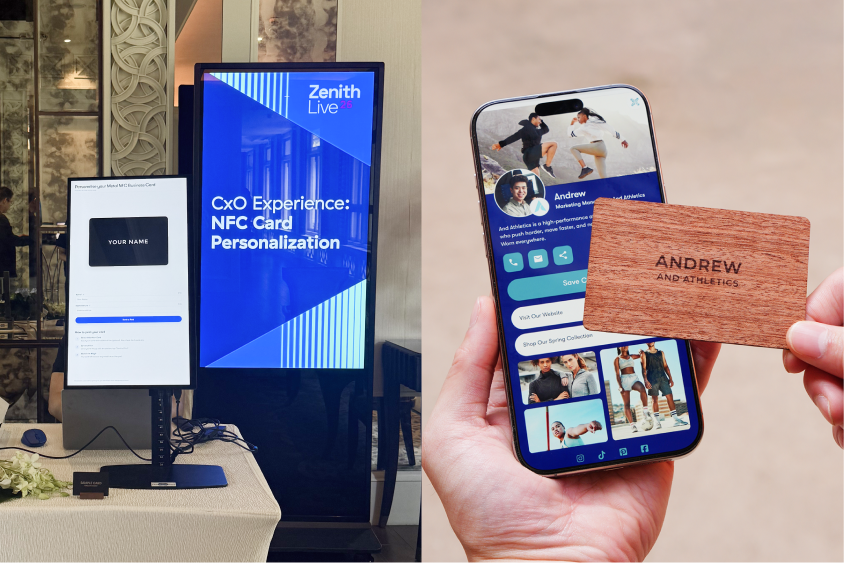
Live engraving is on-site personalisation where a laser engraver cuts a guest's name into a wood or metal NFC card while they wait. A guest types their name at your booth and watches a laser cut it into a metal card. A few minutes later, they walk away holding something with their name permanently in it.
At a live printing booth, the same guest gets a personalised card in about the same time.
Live engraving and live printing take roughly the same time per guest, so the choice comes down to material, finish and quality.
TL;DR: Live engraving cuts a guest's name into a wood or metal NFC card on site, while live printing prints it in gold foil on a black PVC card. Choose engraving for VIP, recognition and premium audiences, and printing for high-volume conferences.
What is live engraving at an event?
Live engraving is a booth activation where guests enter their name and a laser engraver personalises a wood or metal NFC business card in front of them, ready to take away in all under five minutes.
The engraving itself takes a few seconds to a minute per card. Guests can tap it on a phone to share their own digital name card.
How does live engraving work?
The guest journey has five steps and takes a few minutes from start to finish.
- Step up to the booth: The card is ready in the wood or metal finish you chose before the event. Your logo is customised on the back of the card and produced in advance
- Enter their name: The guest types their name and kiosk previews how it will appear on the card.
- Confirm the spelling: On-site staff check the preview with the guest before the machine runs, since engraving cannot be undone.
- Watch it engrave: The laser engraves the name in a few seconds, in full view of the queue.
- Take it away and tap: The guest leaves with a working NFC card and a packaging of how to set up their digital name card.

Live engraving vs live printing: what is the difference?
1. Material
Engraving applies to wood and metal cards, such as Walnut in Sapele wood and Obsidian in stainless steel, the heavier and more premium cards in the range. Printing works on black PVC cards, with the name printed in gold metallic foil.
2. Quality
Metal and PVC differ most in durability. Our Obsidian card is made of stainless steel and tends to be more durable than plastic ones. They are sturdier, resist snapping, cracking and wear better under regular use.
A PVC card is durable for everyday use too, but its print sits on the surface. An engraved name is cut into the metal itself, so for a card someone carries for years, engraved metal is the longer-lasting option.
3. Finish
Live printing puts the name in gold metallic foil on a black PVC card. Engraving etches the name into the wood or metal, leaving a single engraved finish.
Neither format does full-colour designs during the event. If your design needs full colour, order pre-printed cards instead.
4. Branding placement
With engraving, your logo goes on the back, produced in advance, and the guest's name is the first thing they see. With printing, the guest's name is printed on the front, and the back carries the business card QR code and an optional event logo.

| Live engraving | Live printing | |
|---|---|---|
| Guest journey | Under 5 minutes | Under 5 minutes |
| Card materials | Wood and stainless steel metal | PVC |
| What is personalised live | Guest's name etched | Guest's name, printed in gold foil |
| Finish | Engraved metal finish | Matte black PVC |
| Logo placement | Back with QR code | Back with QR code |
| Feel in the hand | Heavier, premium | Light, standard card |
| Best for | VIP, recognition, small batches | High volume, general attendees |
Is live engraving slower than live printing?
No, it is about the same, and both deliver a finished card in under five minutes per guest.
This is worth stating plainly because most event organisers assume engraving is the slower option and shorten the booth window to match. A few seconds to a minute per card puts engraving in the same range as printing, and the time a guest spends deciding how their name should look is the same either way.
Which is better for your event?
In short, engraving suits small, high-value audiences where quality and prestige matter. Printing suits large audiences.
Executive, board and VIP audiences
Engraving, on metal. Small numbers, high perceived value, and recipients whose impression of your brand is worth the unit cost.
Awards, recognition and milestone events
Engraving. Long-service awards, top-performer recognition and graduation ceremonies suit something permanent with a name in it.
Large conferences and trade shows
Printing, usually. Volume events suit the lighter PVC card, with the guest's name on the front and your event logo on the back.
Product launches and campaign activations
Pre-printed cards if the design is full colour, since neither live format prints in colour. Live printing suits a black and gold card with the guest's name on the front and your event logo on the back.
Mixed audiences at one event
Both. Engraved metal for the speaker and VIP track, printed cards for general attendees, so you spend where it registers. Our guide to corporate gifts by budget shows what you can give under S$30, S$50 and S$100.
Why does on-site personalisation work so well?
People value things they helped create. Researchers at Harvard, Tulane and Duke called this the IKEA effect. In four studies where people assembled IKEA boxes, folded origami and built Lego sets, participants valued their own creations more highly, and the effect held only when the task was completed. Typing your own name and watching the card get made is a small version of the same thing: a finished object the guest had a hand in.
It also gives your booth staff a natural conversation window. A guest waiting for their card is standing still and paying attention, which at a busy conference is worth as much as the card itself.
Engraving adds one more factor. A laser visibly cutting metal draws onlookers, which matters if footfall is one of your booth goals.
How many guests can a booth serve per hour?
We typically print between 200 and 350 personalised NFC business cards per hour, depending on the level of customisation. For larger conferences and exhibitions, multiple printers and team members can be deployed to increase capacity.
What do you need to plan for at the venue?
- Space and power: A standard booth or table of around 2m × 1m with access to power is usually sufficient. If your venue has different space requirements, we'll customise the setup to suit your event.
- Card material: Decide on the card material and type of customisation before the event
- Design: Decide on whether you would like to print your event/company logo at the back of the card. For name personalisation, we offer 5 different designs for your guests to choose on the spot.
- Booking ahead: Enquire as early as you can with your event date and expected guest numbers, so machines, stations and card stock can be planned.
What happens after the guest leaves the booth?
The guest leaves with a working digital business card, tap it on a phone to share your digital name card.
For your own team, the event is also a lead-capture opportunity. Staff sharing their own cards can collect visitor details through a contact form on their digital name card, and those contacts land in the contact manager for follow-up. Our guide to following up after events has templates for the days after.
How do you measure whether the activation worked?
- Cards produced tell you reach at the booth.
- Leads captured through staff digital name cards tells you how many conversations turned into contacts.
- Card activity in analytics, such as taps and views on your team's cards during and after the event, shows how much the event moved against your baseline.
- Follow-ups booked in the two weeks after are the outcome that matters most.
Which should you choose?
Both formats put a personalised NFC card in a guest's hand in about the same time. Choose engraving when material and quality matter, and printing when volume does. For full-colour designs, order pre-printed cards.
Additional information
- NFC live printing for events for full details of the service
- Card range shows available materials
- Corporate gifting page for pre-produced gifts
- How live printing works at your event,
- Personalised cards for events in Singapore
- What running a live printing booth taught us about networking

Frequently asked questions
What is live engraving at an event?
How long does live engraving take per person?
Is live engraving slower than live printing?
Which is better for a large conference, engraving or printing?
Will an engraved name wear off?
Related articles

Corporate Gifts by Budget: What to Give Under S$30, S$50 and S$100
Corporate gift types that suit each budget tier, with One Good Card's NFC business cards, smart rings, accessories and bundles...
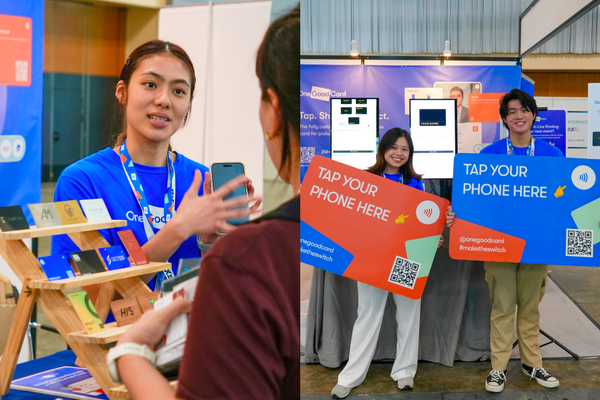
What Running a Card Live Printing Booth Taught Us About Networking at Singapore's Biggest Events
We ran our live printing station at ATxSG and NPF Retail. Here's what we learned about engaging event attendees and...
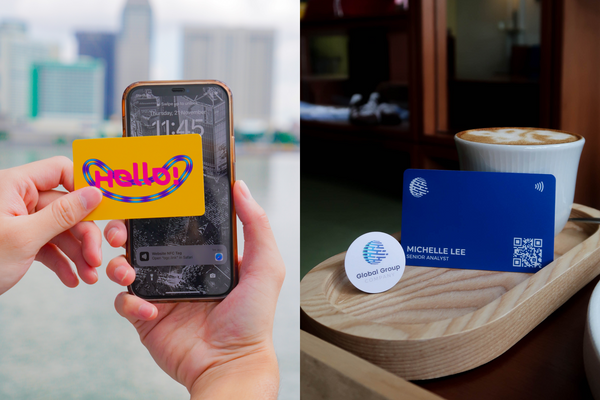
Impressive Door Gifts for Your Next Corporate Event
Explore unique door gift ideas to make your corporate event memorable, from custom keepsakes to modern, practical gifts.
The all-in-one digital business card
for professionals
- ✓ Fully Customisable
- ✓ Lifetime Updates
- ✓ AES-256 Encryption
- ✓ Certified CSA-Compliant
- ✓ iOS and Android