
What Running a Card Live Printing Booth Taught Us About Networking at Singapore's Biggest Events
We ran our live printing station at ATxSG and NPF Retail. Here's what we learned about engaging event attendees and why customisation beats generic swag.

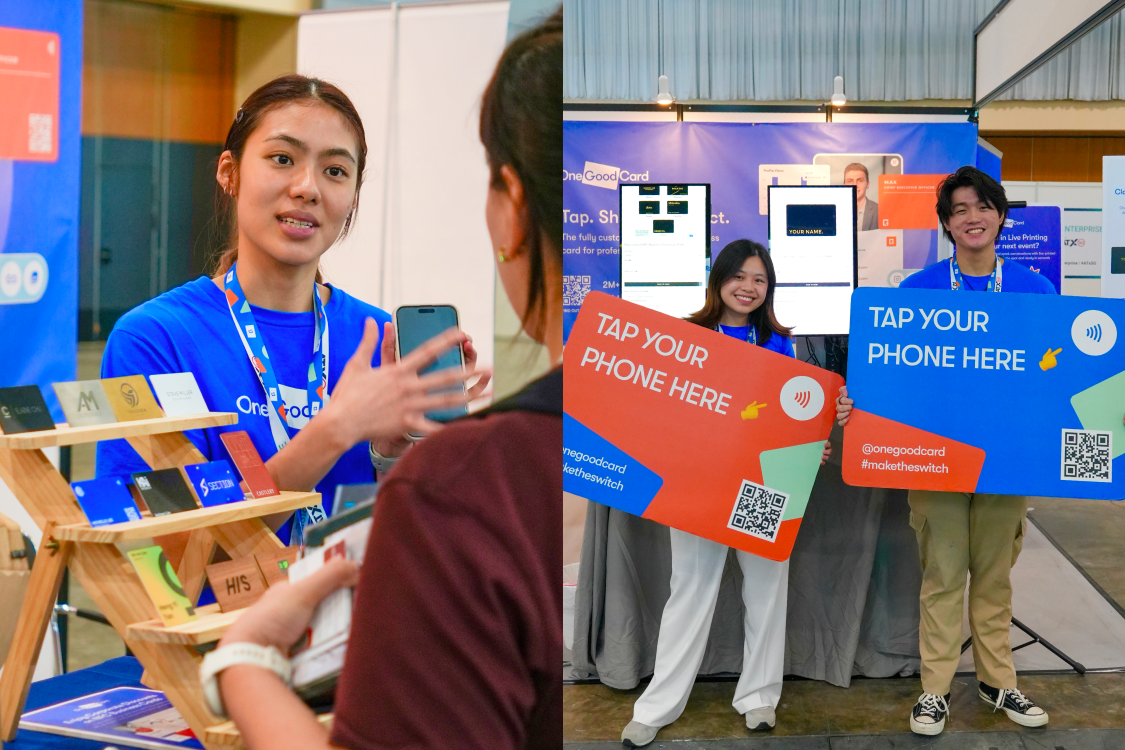
If you have ever walked through an exhibition hall at a major trade show, you would know the feeling. Rows of booths, branded backdrops, free pens, tote bags, water bottles, snacks. By the third aisle, everything starts to blur together. Most attendees walk past more booths than they stop at, which is a real problem if you are the one running a booth.
This year, we ran our live printing station at Asia Tech x Singapore (ATxSG) and NPF Retail Singapore, and the experience taught us a lot about how people actually engage at events when you give them something they have not seen before.
What the Live Printing Station Looks Like

The setup is straightforward. We had two kiosks at our booth, each with a touchscreen monitor where event attendees are able to design their own One Good Card on the spot. They type in their name, choose from five card designs, and send it to print. The printer sits at the back of the booth, and within about a minute, the card is done.
The full booth experience flows like this. Attendees first head to the contact form station, where they either fill in their details or hand over their existing paper business card for us to scan. Once their information is captured, they move to one of the kiosks to customise and send their card to print. While they wait for the card to be printed, they have a few minutes to chat with our team members — ask questions about One Good Card, see how the NFC tap works in real time, or just have a conversation about what they do and what they were hoping to get out of the event.
When the card is ready, it comes packaged with simple instructions and a serial number for activation. What we have noticed is that many attendees prefer to hang around the booth after collecting their card. They want to activate the card on the spot, set up their digital name card, and ask any clarifying questions while our team is right there to help. This opportunity turns what could have been a quick swag pickup, into a proper product introduction.

Our team members are there throughout the process to help with design choices, walk people through the activation, and make sure no one accidentally sends the same card to print twice. The whole experience from arriving at the booth to walking away with an activated, ready-to-use card takes about ten minutes, long enough for a real conversation, short enough that people are happy to wait.
Why It Works
The main reason live printing works as a booth concept is simple: it is engaging. It is attention-grabbing. And it gives people a reason to actually stop walking.
This is something we noticed could be a real problem for any brand running an event booth. There are so many booths at a typical trade show that the experience can be overwhelming for attendees. People often walk through entire sections of an exhibition hall without stopping at a single booth, simply because they do not know which ones are worth their time. If your booth does not give them a clear reason to stop, they will not.
According to research compiled by Amra and Elma, around 46% of attendees engage with booths for 15 to 30 minutes when something at the booth holds their attention, and 48% of exhibitors say eye-catching displays attract the most attendees. The bar to clear is high, but the reward for clearing it is real engagement time. A live printing station gives people a reason to engage.
Why Customisation Beats Generic Swag
The other thing we noticed is that people respond differently to something made specifically for them, compared to standard event giveaways. Most season event attendees already have a drawer full of branded tote bags, water bottles, lanyards, and pens from every event they have ever attended.
A card with their own name on it, designed by them in real time, is a different thing entirely. It is personal, it is useful, and they remember the experience of making it. Even if they walk away and never use the card for networking, they remember the brand that gave it to them, because they were involved in creating it.
That is the difference. Generic swag is forgettable because it is interchangeable. A customised card is memorable because it could not have come from anywhere else. This matters more than it might seem on paper. Industry research compiled by Dreamcast shows that the average trade show attendee spends only 5.5 hours at an event in total — meaning every minute spent engaging with your booth is competing with every other booth in the hall. Giving people a reason to commit those minutes to you is the entire game.
It's a Conversation Starter, Not Just a Giveaway
The live printing station is not just about handing out cards. While people are designing their card, they are also asking questions about One Good Card itself. How does the NFC tap work? Can I customise the digital name card too? Does it work for teams? Can my company get these printed in bulk?

Those are the conversations we actually want to have. The card is the hook, but the real value of the booth is the chance to have a proper conversation with someone who has just experienced the product for themselves.
We also used our in-built contact form during the live printing process. Event attendees fill in their details before sending their card to print, which gives us a way to follow up after the event. Sometimes that follow-up is to ask about their experience with the card. Other times, it is to discuss whether their company would be interested in digital business cards for their team. The form essentially functions as our lead generation tool for the event, captured naturally as part of the experience rather than as a separate "sign up here" pitch.
How We Actually Follow Up After the Event
The hardest part of any event is not getting people to stop by your booth. It is making sure those interactions lead to something after the event ends. This is where most exhibitors lose momentum, and it is something we have built our entire post-event workflow around.
All of these leads flow directly into our team's Centralised Dashboard, where our account representatives and BD team can see every contact captured at the event in one place. From there, they reach out individually — to ask about the recipient's experience with the card, to follow up on any specific questions raised at the booth, or to start a conversation about deploying One Good Card across the recipient's company.
For attendees who prefer to hand over their paper name card instead of filling in a form, we use our OCR Scanner on the spot. We photograph the card, the scanner extracts the contact details automatically, and the contact is saved into our Contact Manager within seconds. No manual typing, no stacks of paper cards waiting to be processed back at the office.
The combination means that by the end of an event, every meaningful interaction has been captured and is ready for follow-up. The work that usually piles up post-event has already been done.
Why Singapore Is a Strong Place for This
Singapore is a particularly good place to run this kind of event activation. As a regional business hub, events like ATxSG and NPF Retail are APAC-wide events, which means attendees fly in from across the region to attend. For exhibitors, this is a level of exposure that would be difficult to achieve in any other single market.
According to TTGmice, Singapore's MICE (Meetings, Incentives, Conventions, and Exhibitions) sector helped the country reach a record S$23.9 billion in tourism receipts, placing first in Asia-Pacific and third worldwide according to the International Congress and Convention Association (ICCA). The Singapore Tourism Board's Tourism 2040 plan aims to further triple MICE revenue by clustering meeting space, retail, and transport nodes in a downtown hub, signalling that the investment in Singapore's events scene is only set to grow.
It also makes Singapore a strong base for smaller brands looking to expand overseas. You do not need to physically establish yourself in every market in the region to start building visibility with people from those markets. Showing up at a major Singapore-based event can be part of an overseas expansion strategy without the cost of actually being in those countries.
For us at One Good Card, this means a single event can introduce the product to professionals from across APAC in a few days. The live printing station ensures we make the most of that exposure by giving people a reason to engage with us properly, not just walk past.
What This Means If You Are Running a Booth
If you are planning to exhibit at a business event in Singapore, the takeaway is this: people respond to experiences, not handouts. Anything that gives an attendee a reason to stop, engage, and walk away with something memorable is more valuable than a stack of branded merchandise.
It does not have to be a printing station. It could be a live demo, a hands-on activity, or anything that turns a passive booth visit into something the attendee participates in. The goal is to give people a reason to remember you after the event ends, and to give yourself a reason to follow up with them.
According to Dreamcast, the average cost per lead at a trade show is $112, compared to $259 for a traditional field sales call, and 52% of business leaders believe trade shows deliver the highest ROI of any marketing channel. The investment in the booth setup pays for itself when the engagement is real. The brands that underinvest in the experience and overinvest in the swag are the ones that walk away wondering whether the event was worth it.
In-Person Events Are a Rising Brand Strategy
Beyond traditional trade shows, in-person events have grown into one of the most important brand awareness strategies for modern companies. The brands that are getting this right are not just exhibiting at other people's events, they are building entire flagship events of their own.
Figma is one of the clearest examples. The company's annual user conference, Config, grew from 1,000 attendees at its 2020 debut to over 10,000 in-person attendees by 2024 — a 750% increase in five years, making it a central pillar of how Figma builds community and brand affinity with its users. Canva runs a similar flagship event called Canva Create, which will take place at Hollywood Park in Los Angeles in 2026, with both paid in-person and free online options. These are not side activities for these companies. They are core marketing investments that bring users, prospects, and the broader industry into the same room.
The pattern is clear: the brands that take in-person events seriously are using them to do things that digital channels cannot. Bringing thousands of users together physically creates a depth of brand connection that no ad campaign can replicate. And while not every brand needs to launch its own conference, the underlying principle applies at every scale — including the booth at a major industry event. The way you show up in person shapes how people remember you long after.
Singapore's events scene is one of the most active in the region, and the competition for attention at any given booth is real. After running our live printing station at ATxSG and NPF Retail this year, we are convinced that the brands that win at these events are not the ones with the most swag. They are the ones who give attendees a reason to stop, talk, and walk away with something that actually means something to them.
If you have a One Good Card and want to see what the experience is like in person, we will be at more events across Singapore this year. And if you are a company interested in exploring digital business cards for your team, we would be happy to chat, whether at an event or otherwise.

Related articles
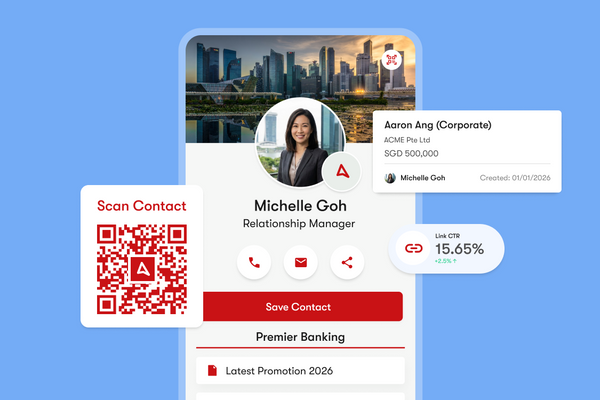
How to Maximise Your One Good Card: 10 Features You Might Not Know
Discover 10 powerful One Good Card features you might not know, from real-time edits and lead capture to CRM sales...
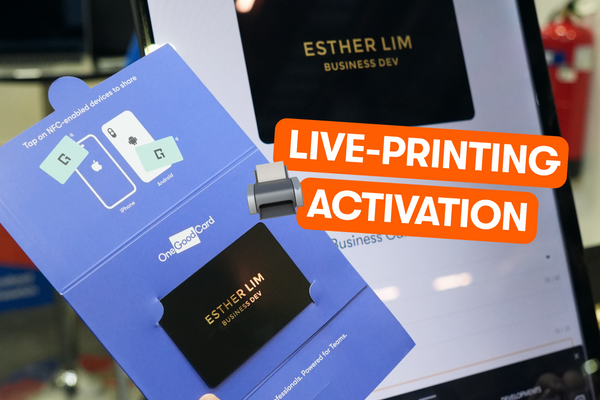
Live Printing at Your Event: Singapore’s Smart NFC Live-Print Experience
Transform your events in Singapore with on-site personalised NFC business cards live printed in seconds. Perfect for conferences, networking nights,...
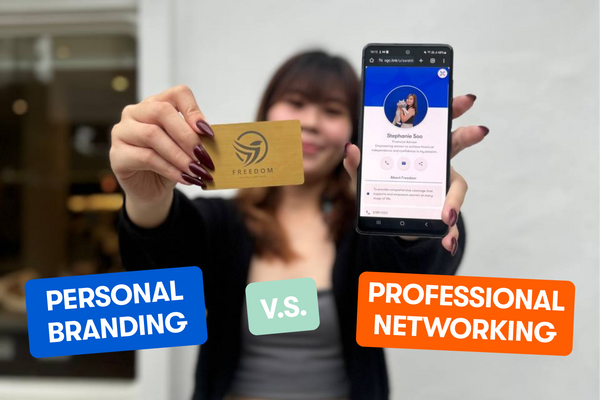
Personal Branding vs. Professional Networking: A Guide to Digital Networking
Confused about personal branding and networking? This article clears it up and shows how digital networking connects the dots. Find...
The all-in-one digital business card
for professionals
- ✓ Fully Customisable
- ✓ Lifetime Updates
- ✓ AES-256 Encryption
- ✓ Certified CSA-Compliant
- ✓ iOS and Android