
Digital Name Cards for Companies: The Business Case in 2026
Digital name cards for companies cut print costs, standardise branding, and make networking measurable. Here's what you should consider.


Managing name cards across a company is one of those operational tasks that quietly consumes far more time and money than it should. Every new hire triggers a print order. Every promotion or role change means reprinting. Every rebrand renders the current stock obsolete overnight. And the moment cards are printed, there is no way to update them, no way to track how they are being used, and no way to ensure consistency across the entire team.
For companies of any size, this is a solved problem. Digital name cards for companies replace the paper-and-print cycle with a centralised, updatable, and measurable system that scales with the organisation.
Here is what to consider if you are a decision-maker evaluating the switch.
The real cost of paper name cards across a company
Most companies underestimate how much they actually spend on paper name cards. The per-card cost looks small until you multiply it across every employee, every role change, every rebrand, and every print reorder that happens over the course of a year.
For a 100-person company, a single card refresh (design, print, and distribution) can run into the thousands. Multiply that across annual rebrands, quarterly hires, and inevitable reprints, and the recurring cost is significant. According to Adobe research, 88% of paper business cards are discarded within a week of being received, meaning most of that print budget is going toward cards that never generate a meaningful business outcome.
Beyond the direct cost, there is administrative overhead: someone has to coordinate the print orders, manage stock, handle reprints when details change, and dispose of outdated inventory when rebrands happen. All of this is time that could be spent on higher-value work.
What digital name cards for companies actually do
Digital name cards for companies replace the entire paper workflow with a cloud-based system. Every employee gets a digital name card that can be shared instantly via NFC tap, QR code, or link. Company administrators manage all digital name cards from a single dashboard, with full control over branding, access, and updates.
The result is that networking becomes a scalable, standardised process rather than an ongoing series of print orders and coordination tasks.
Here is what a company-wide platform like One Good Card gives you:
Centralised Team Dashboard
The Centralised Team Dashboard gives administrators a single view of every employee's digital name card. You can see who has been onboarded, whose digital name card is current, and how each card is performing at a glance. No more spreadsheets tracking print orders, no more chasing individual employees to update their details.
Bulk digital name card management
When your company details change (address, phone number, website URL, branding), you update once and every employee's card reflects the change immediately. For an organisation with 200 employees, this replaces what would have been a full-day admin task with a single action.
Fully customisable corporate branding
Every digital name card can be locked to your company's branding guidelines: logo, colour palette, fonts, layout, and content structure. This ensures that no matter which employee shares their card, the recipient sees a consistent, on-brand experience.
This matters more than it might sound. Research by Lucidpress and Marq shows that consistent brand presentation across all channels can increase revenue by up to 23%, while brands that maintain strict consistency are 3 to 4 times more likely to achieve strong visibility. If your team is representing your company through their name cards, brand consistency across those cards is not a cosmetic concern. It is a revenue lever.
Access controls and permissions
Administrators can restrict what individual employees can edit on their digital name cards. Contact details might be editable by the employee, but branding, layout, and company-wide information stays locked to admin control. This prevents well-meaning but off-brand edits and keeps the whole team's digital presence consistent.
Analytics on individual and team performance
Every digital name card view, link click, and contact save is trackable, both at the individual employee level and across the entire team. For sales, BD, and marketing teams, this data is genuinely useful: you can see which employees are actively networking, which events are generating the most engagement, and which channels are converting attention into follow-up.
Why companies are making the switch
Beyond the direct cost and admin savings, there are three broader reasons companies are moving to digital name cards.
1. Onboarding new hires is faster
For any company that hires regularly, waiting weeks for physical cards to arrive from a printer creates a small but real friction in the onboarding process. New employees often go without cards for their first few weeks, which is exactly when they are meeting the most new people internally and externally.
With digital name cards, a new hire can have a fully branded, ready-to-share card within minutes of being added to the platform. No print lead time, no coordination with a supplier, no waiting.
2. Brand consistency scales automatically
Even companies with well-documented brand guidelines struggle to enforce them across every employee touchpoint. Research shows that 95% of organisations have brand guidelines, but only 25 to 30% actively use them. Name cards are one of the touchpoints where inconsistency is most visible: different fonts, different layouts, outdated logos, mismatched contact information.
Digital name cards remove this problem structurally. If the admin sets the template, every employee's card matches. There is no way to accidentally deviate, no way to use last year's logo, no way to print off-brand cards without the admin's knowledge.
3. Networking becomes measurable
Paper cards give you no visibility. Once handed over, you have no idea whether the recipient looked at it, saved the contact, or threw it away. For sales-driven companies, this is a significant gap.
Digital name cards close it. Every share, view, and interaction is logged. Team leads can identify which employees are generating the most engagement, which channels are performing best, and where to invest in future networking activity. It turns networking from an assumed-value activity into a measurable one.
Sustainability as a business consideration
For companies with sustainability commitments, digital name cards are one of the more measurable and defensible switches to make. An estimated 100 billion paper business cards are produced globally each year, and switching to digital eliminates that print footprint entirely across your organisation.
For companies reporting ESG metrics, the paper waste reduction can be quantified. For companies without formal sustainability programs, the reduction is still a genuine, visible commitment that resonates with employees, partners, and clients who prioritise environmental responsibility. According to PwC's 2024 Voice of the Consumer Survey, 46% of consumers now opt for goods that are sustainably produced or sourced, and are willing to pay an average of 9.7% more for sustainable products. The signal your company sends through everyday tools like business cards contributes to that broader perception.
What companies are right for digital name cards?
Small and mid-sized companies (10 to 500 employees): The admin overhead of managing paper cards across a growing team is where the ROI shows up fastest. Onboarding delays, brand inconsistency, and reprint costs are usually the most acute at this scale.
Sales-driven organisations: For companies where networking is directly tied to revenue, the combination of analytics, lead capture, and CRM integration makes digital name cards significantly more valuable than the paper equivalent.
Companies with distributed or hybrid teams: When employees are spread across locations or working remotely, coordinating physical card orders becomes even more of a logistical challenge. Digital name cards remove the geography problem entirely.
Organisations with strong brand consistency requirements: Financial services, professional services, and consumer brands. Any company where every employee touchpoint reflects on the parent brand benefits from centralised control.
Enterprises undergoing digital transformation: For companies already moving away from paper-based processes in other areas (HR, procurement, contracts), digital name cards align with that broader direction.
Evaluating a digital name card platform for your company
If you are evaluating options, here are the criteria that matter most for company-wide deployment:
Centralised admin dashboard: Non-negotiable. You need a single view to manage every employee's card, without switching between individual accounts.
Bulk editing and updating: Essential for making organisation-wide changes efficiently. Look for a platform that lets you update multiple digital name cards at once, not one by one.
Brand standardisation controls: The platform should let admins lock branding elements (logo, colour, layout) while allowing employees to update their own contact details.
Team-level and individual analytics: Look for reporting that shows both individual employee activity and aggregated team performance.
Access controls: The ability to restrict what individual employees can edit protects brand consistency and prevents unauthorised changes.
Security and compliance: For enterprise use, check for recognised security certifications. One Good Card is cyber-certified by CSA (Cyber Security Agency of Singapore), which matters for companies with data protection requirements.
Support for multiple sharing methods: NFC cards, QR codes, wallet integration, email signatures, virtual backgrounds. The more sharing channels supported, the more useful the cards are across different networking contexts.
Scalability: The platform should support your current headcount and scale as your company grows, without requiring a re-implementation later.
For any company that has grown beyond a handful of employees, managing name cards across the organisation is one of the clearer opportunities to remove operational friction, reduce recurring costs, and gain visibility into a networking activity that was previously invisible.
Digital name cards for companies are not just a modernised version of paper cards. They are a full team-management platform that treats networking as a scalable, measurable business function, which is what it has always been.
If your company is still managing name cards through a mix of print orders, spreadsheets, and outdated stock in employee drawers, it may be time to look at what a company-wide digital platform can do.

Related articles
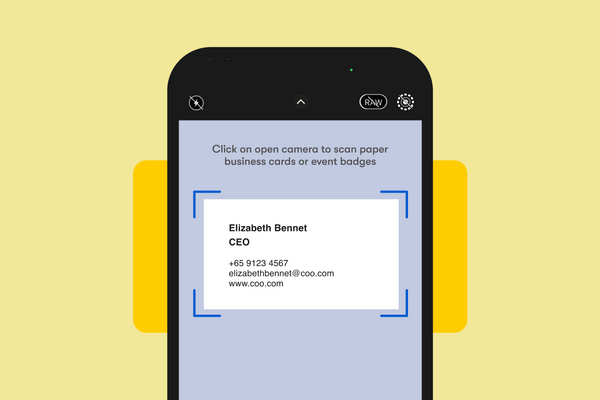
Scan Paper Name Cards into Contacts with OCR Scanner
One Good Card's OCR Scanner reads paper business cards and saves contacts automatically. Available on iOS and Android. No more...
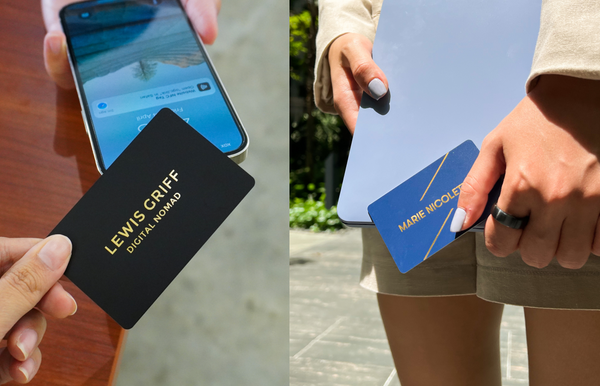
Why Use a Digital Business Card in 2026: 8 Reasons It's Worth the Switch
Digital business cards do everything paper cards do, plus lead capture, CRM, and real-time updates. Here are 8 reasons to...
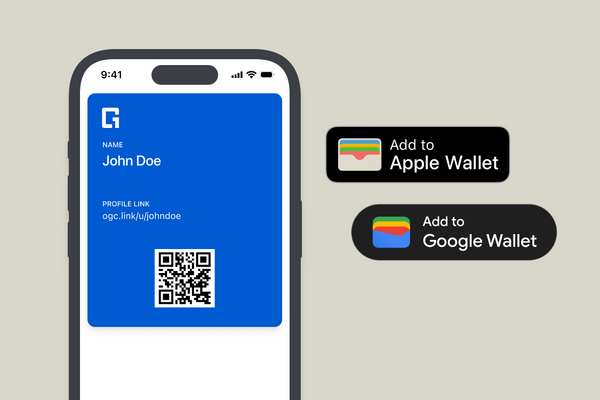
Introducing Add to Mobile Wallet: Your Digital Business Card Now Lives in Apple & Google Wallet
One Good Card now supports Apple Wallet and Google Wallet. Customise your wallet card, share via QR code, and keep...
The all-in-one digital business card
for professionals
- ✓ Fully Customisable
- ✓ Lifetime Updates
- ✓ AES-256 Encryption
- ✓ Certified CSA-Compliant
- ✓ iOS and Android