
Why Use a Digital Business Card in 2026: 8 Reasons It's Worth the Switch
Digital business cards do everything paper cards do, plus lead capture, CRM, and real-time updates. Here are 8 reasons to make the switch in 2026.

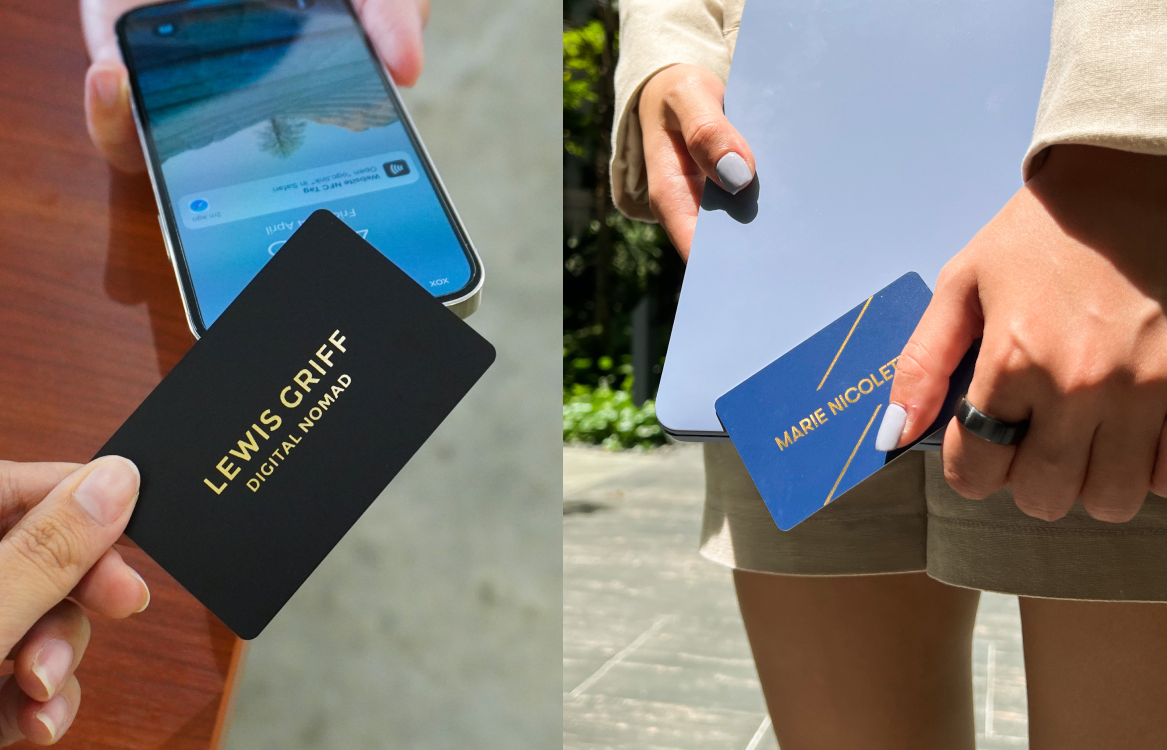
For decades, business cards have been the default way to exchange contact details in a professional setting. You meet someone, hand over a small piece of card stock, and hope they hold onto it long enough to actually reach out. That workflow has stayed mostly the same for over a century.
What has changed is that we now have a better version of it. Digital business cards do everything a paper card does, plus a lot more that a paper card simply cannot. And in 2026, more professionals and companies are making the switch than ever before.
Here are eight reasons to use a digital business card, and what to look for if you are considering the switch.
What Is a Digital Business Card?
A digital business card is the modern replacement for a paper business card. Instead of printed contact details on a piece of card stock, your details live on a digital name card that can be shared instantly through NFC tap, QR code scan, link, or wallet card.

When someone receives your digital card, they can save your details to their phone with one tap. No typing, no keeping a physical card in their wallet, no risk of losing it.
Beyond replacing the physical card, most modern digital business card platforms also come with additional tools (lead capture, contact management, and CRM features) that turn networking from a one-off exchange into a trackable process.
8 Reasons to Use a Digital Business Card
1. Your Details Update Instantly
The most immediate benefit of a digital business card is that you can update your details anytime, and everyone who has your card sees the update in real time.

Changed your job title? Moved companies? Updated your phone number? On a paper card, that means reprinting a whole new batch and hoping the old ones do not still circulate. On a digital card, you update your digital name card once from your dashboard and every future share reflects the change. There is no need to reprint, redistribute, or worry about outdated details being handed out with your name on them.
2. It Saves Money in the Long Run
Digital business cards cost less over time than reprinting paper cards year after year.
Paper business cards typically need to be reprinted every time details change, when stock runs low, or when your branding is updated. For a company managing cards across a whole team, those costs add up quickly. A digital business card is a one-time setup that scales with your organisation, without the recurring print costs.
3. It Reduces Paper Waste
Sustainability is not just a marketing angle. It is a practical benefit that matters more each year.
According to research cited by QR Code Chimp, an estimated 100 billion paper business cards are produced globally each year, and roughly 88% are discarded within a week of being handed out, according to Adobe. That is a significant amount of paper waste generated by a habit with a clear digital alternative. Switching to a digital business card eliminates the print cycle entirely.
4. It Is Faster and More Convenient to Share
Sharing a digital business card takes seconds and works across multiple channels. Tap your NFC card against someone's phone, let them scan your QR code, send your digital name card link over WhatsApp or email, or add your card to your Apple Wallet or Google Wallet for instant access.

The recipient does not need to download an app. They just receive your details on their screen and save them to their contacts with one tap. Compared to fumbling for a paper card, jotting down details manually, or asking to exchange numbers, digital sharing removes almost all of the friction from the process.
5. It Makes You Harder to Forget
Paper business cards are easy to lose, easy to misplace, and easy to throw out when a wallet gets too full. A digital business card lives on the recipient's phone, saved directly into their contacts. Once they have your details, they are always accessible.
You can also add a photo, brand colours, social links, and a customised splash screen to make your card more memorable. The recipient does not just have your phone number. They have a full snapshot of who you are and what you do.
6. It Captures Leads, Not Just Shares Details
This is where digital business cards go beyond simply replacing paper. A modern digital business card platform can also capture leads directly from your digital name card.
With One Good Card, you can add a contact form widget to your digital card so recipients can share their own details back to you. Their submissions flow into your Leads tab and Contact Manager, ready to be followed up on. If the person you met has a paper card instead of a digital one, our OCR Scanner lets you snap a photo of their card and extract the contact details automatically.
The result is that every interaction, inbound or outbound, is captured and trackable. This is something a paper card simply cannot do.
7. It Works Better for Teams and Companies
For any business managing more than a handful of employees, paper cards create ongoing administrative friction. Every hire, promotion, or rebrand triggers another print order. Every employee ends up with a slightly different card design, phone number format, or job title framing.
Digital business cards solve this at scale. With a Centralised Team Dashboard, administrators can manage every employee's card from a single view, standardise branding across the organisation, and update details in bulk. Employees always have a professional, on-brand card ready to share, and the company never has to deal with outdated print inventory again.
8. It Gives You Analytics on Your Networking

Every share, view, and click on your digital business card can be tracked. You can see how many people opened your card after an event, which links they clicked, and which contacts saved your details.
For paper cards, once you hand one over, you have no idea what happens next. Digital cards give you visibility into how your networking is actually performing, which is especially valuable for sales and BD professionals who need to justify time spent at events or gauge which channels are converting.
The Broader Shift in How People Network
The move toward digital business cards is part of a broader shift in how professionals build and manage their networks. According to Mordor Intelligence, the digital business card market is projected to grow from USD 199.39 million in 2025 to USD 331.78 million by 2031, at a compound annual growth rate of 8.86%. Research Nester puts the market growth even higher, forecasting a 12.2% CAGR through 2035 as smartphone penetration and hybrid work continue to drive adoption.
The main drivers behind this growth are consistent across every major market research report: enterprises are switching from paper exchange to smartphone-native, cloud-synced solutions that integrate directly with CRM tools. In other words, digital business cards are no longer being adopted just because they are digital. They are being adopted because they do things a paper card cannot.
What to Look For in a Digital Business Card
Not all digital business cards are built the same. Some are little more than digital versions of a paper card, a URL that opens a page with your contact details. Others, like One Good Card, come with a full suite of tools built around the card itself.
If you are evaluating options, here are the things worth checking:
Sharing methods: The best platforms support NFC tap, QR code scan, personalised links, and digital wallet passes. The more options, the more flexible your card is across different situations.
Customisation: Look for a platform that lets you fully customise the card design, layout, branding, and digital name card content without hidden paywalls limiting what you can do.
Lead capture: A digital business card should do more than share your details. It should also help you receive details back through a contact form, and organise those leads in one place.
Contact management and CRM: For professionals who network actively, an integrated contact manager and deal pipeline turns your card into a full networking tool, not just a sharing mechanism.
Team features: If you are managing cards across a company, a centralised admin dashboard is essential for maintaining consistency and controlling access.
Analytics: Being able to see how your card is performing (views, clicks, contacts saved) gives you feedback on your networking effort.
Security: For business use, look for a platform with recognised security standards. One Good Card is cyber-certified by CSA (Cyber Security Agency of Singapore).
Should You Make the Switch?
The short answer is yes, and the longer answer is that it depends on how you use your business card today.
If you rarely exchange contact details in person, a digital business card is a low-cost, low-effort upgrade that ensures anyone who does receive your card has your latest information.
If you network actively (sales, BD, recruitment, freelancing, events), a digital business card is closer to essential. The combination of instant sharing, lead capture, and contact management removes the manual admin that usually takes networking from a good conversation to an actual follow-up.
And if you are a company, the case is even stronger. Digital cards remove the recurring cost and coordination overhead of managing paper cards across a team, while giving you central visibility into how your team is networking.
Business cards are not going anywhere, but the paper version is being replaced by something better. Digital business cards do everything a paper card does, and then add real-time updates, lead capture, contact management, team-wide branding, and networking analytics on top.
If you have been thinking about making the switch, there is no better time than now.

The all-in-one digital business card
for professionals
- ✓ Fully Customisable
- ✓ Lifetime Updates
- ✓ AES-256 Encryption
- ✓ Certified CSA-Compliant
- ✓ iOS and Android