
Top 10 Business Card Insights You Should Know in 2026
The digital business card market, NFC adoption, wallet usage, and networking data you need to know in 2026, backed by the latest industry statistics.


Business cards have been around for centuries, but the way we exchange them has changed more in the past five years than in the previous fifty. Digital business cards, NFC technology, mobile wallets, and integrated CRM tools have shifted networking from a paper-based exchange into something faster, more measurable, and more useful.
For anyone thinking about how they network in 2026, here are the ten business card insights worth paying attention to, backed by the most current data available.
1. The Digital Business Card Market Is Growing Steadily
The digital business card market is projected to grow from USD 199.39 million in 2025 to USD 331.78 million by 2031, at a compound annual growth rate of 8.86%, according to Mordor Intelligence. Research Nester forecasts even higher growth of 12.2% CAGR through 2035.
The main drivers are consistent across every major market research report: enterprises switching from paper exchange to smartphone-native, cloud-synced solutions that integrate with CRM tools. Digital business cards are no longer being adopted just because they are digital. They are being adopted because they do things paper cards cannot.
2. Adoption Among Businesses Has More Than Doubled Since 2020
37% of businesses have adopted digital business cards as of 2026, up from 16% in 2020. That is more than double the adoption rate in five years, with the pandemic acting as the tipping point for many organisations.
Adoption is uneven across industries. Technology companies lead at 72% adoption, while traditional sectors like manufacturing sit closer to 28%. If your industry is on the slower end of that spectrum, showing up with a digital card can itself be a signal that you take modern networking seriously.
3. Almost Every Smartphone in the World Is NFC-Enabled
According to Market.us, around 94% of all smartphones globally are now equipped with NFC technology. By 2026, 81% of all payment cards are also expected to be contactless.
This matters for business cards because NFC is what makes tap-to-share work. If a recipient has a smartphone, they almost certainly have the technology to receive your card with a single tap. There is no compatibility barrier, no app required, no learning curve for either party.
4. Digital Wallets Are the New Default
According to CoinLaw, by the end of 2025, an estimated 78% of smartphone users globally have at least one digital wallet installed. Apple Pay alone is projected to have approximately 624 million users in 2025.
The digital wallet is no longer just for payments. Boarding passes, event tickets, loyalty cards, and increasingly, business cards, all live in the same place. This shift changes the expectation of where professional identity is stored: on the phone, one tap away, alongside everything else that matters.
5. Paper Business Cards Have a Waste Problem
An estimated 100 billion paper business cards are produced globally each year, and roughly 88% are discarded within a week of being handed out, according to Adobe. That is a significant amount of paper waste generated by a habit with a clear digital alternative.
For companies with sustainability commitments, this is often the easiest and most measurable switch to make. Replacing paper cards with digital cards eliminates the print cycle entirely and removes an ongoing source of waste that adds up quickly across an organisation.
6. LinkedIn Is No Longer the Only Professional Networking Tool
LinkedIn has grown to over 1.3 billion registered members as of late 2025, with approximately 310 million monthly active users. It remains the world's largest professional network.
But LinkedIn is only one part of the professional networking picture in 2026. The context of an in-person meeting, a follow-up email, a WhatsApp exchange, or a business card tap all matter alongside a LinkedIn connection request. Digital business cards act as the connector across these channels: they consolidate every way someone can reach you into a single, up-to-date profile, and they capture the relationship at the moment of introduction rather than days later.
7. Face-to-Face Networking Is Still Where Real Relationships Are Built
Despite the rise of digital tools, in-person networking has not lost its value. According to Harvard Business Review, 95% of professionals believe face-to-face meetings are essential for building long-term business relationships.
Business event attendance also continues to recover, reaching 92% of pre-pandemic levels in 2024, with several major industry conferences setting all-time attendance records. The takeaway is that digital tools have not replaced face-to-face networking. They have made it more effective, by handling the parts of networking that in-person conversation cannot: capture, follow-up, and long-term relationship management.
8. Contactless Sharing Has Become the Expected Standard
NFC now powers over 95% of contactless transactions globally, and average NFC transaction speeds range between 2 to 3 seconds compared to 8 to 12 seconds for chip insert methods.
This has trained consumers and professionals to expect contactless interactions as the norm. When someone hands over a paper business card in 2026, it can feel slightly out of step with how everything else works. Tapping to share, scanning to pay, and holding a phone near a device are all baseline behaviours now. Business cards are simply catching up to that expectation.
9. The Business Case Extends Beyond Individuals
For companies, the value of digital business cards compounds. Instead of managing print orders across dozens or hundreds of employees, administrators can update every card at once, standardise branding, and maintain consistency across the entire organisation. Onboarding a new employee no longer means waiting weeks for cards to arrive from a printer.
The financial case is equally clear. Digital cards are a one-time setup that scales, without the recurring print costs that come with every hire, promotion, or rebrand. For any business tracking marketing and admin costs closely, replacing paper cards is one of the more straightforward savings to identify.
10. Analytics Are Turning Networking Into Something Measurable
The last insight is the one most professionals still underestimate. Digital business cards come with analytics: how many times your card was viewed, which links were clicked, which contacts saved your details. Paper cards give you none of this information.
For sales professionals, marketing teams, and anyone whose networking is tied to business outcomes, this data is genuinely useful. It helps you understand which events, channels, and audiences are actually converting, and it turns networking from a gut-feel activity into something you can measure and improve on.
What This Means for How You Network
The consistent thread across all ten insights is that the tools available for professional networking have caught up to the way people actually work in 2026. Contactless is the default. Smartphones are the primary interface. Data on how connections perform is expected, not optional.
The professionals who are getting the most out of their networks are the ones using the tools that reflect this reality. A digital business card is not just a modernised version of a paper card. It is the current infrastructure for how professionals introduce themselves, follow up, and maintain relationships in a world where everything else has already gone digital.
If your business card is still made of paper in 2026, it might be time to ask whether it is still doing the job you need it to do.

Related articles
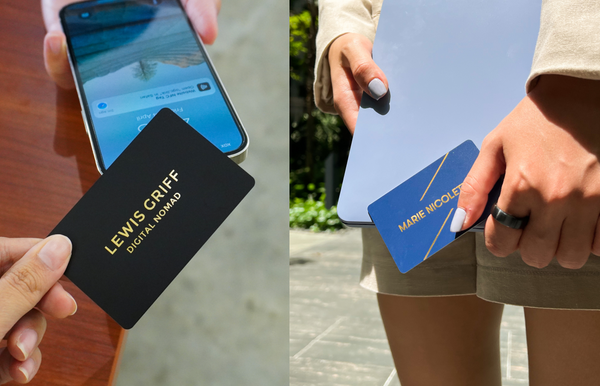
Why Use a Digital Business Card in 2026: 8 Reasons It's Worth the Switch
Digital business cards do everything paper cards do, plus lead capture, CRM, and real-time updates. Here are 8 reasons to...

Business Card Etiquette: The Do’s and Don’ts
Learn the do’s and don’ts of business card etiquette to make lasting impressions and network like a pro, NFC cards...
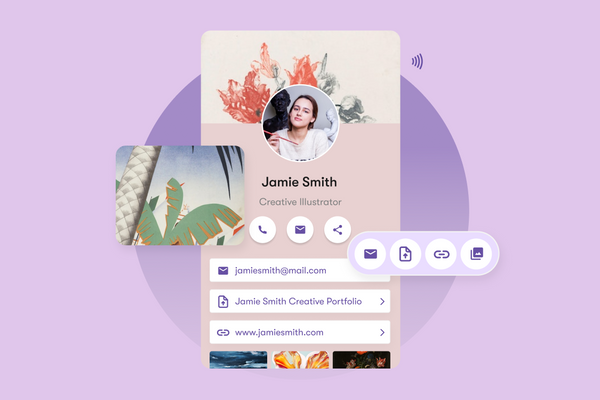
The Ultimate Guide to Digital Business Cards in 2026 (Everything You Need to Know)
Discover how digital name cards work in 2026. Learn about NFC cards, lead generation form, multiple profiles, CRM pipelines, analytics...
The all-in-one digital business card
for professionals
- ✓ Fully Customisable
- ✓ Lifetime Updates
- ✓ AES-256 Encryption
- ✓ Certified CSA-Compliant
- ✓ iOS and Android