
Event Lead Management: How to Capture, Qualify & Follow Up
Four stages between a booth conversation and a qualified CRM record: capture without breaking the conversation, same-day qualify, email verification, selective push.

Two days at a conference, a hundred and twenty conversations, and a phone full of contacts you can’t remember who exactly.
That's the event lead management problem: the value of a conference lead can decay quickly, and most of it is lost between collecting an email and actually following up.
TL;DR:
Capture leads in a custom contact form built for the event, qualify them within 24 hours while you still remember the conversation, verify the email addresses before anything downstream, then push only the qualified ones into your CRM.
What is event lead management?
Event lead management is the process of capturing, qualifying, verifying, and following up with leads collected at conferences, trade shows, and other business events. The goal is to move promising contacts from an event conversation into a meaningful sales conversation as quickly as possible.
What happens to event leads after a conference?
The usual pattern: business cards go in a pocket, names get typed up a week later, and by the time anyone sends something, the prospect has spoken to other vendors and cannot place you. The problem is rarely capture — it is the gap between collecting a name and doing something with it.
There are two places where event lead management tends to fall apart.
The first is the qualification step. It is the one part of the process that still depends on human judgment with no deadline and no one waiting on it, so it gets deprioritised the moment you are back at your desk with three days of email competing for the same hour.
The second is ownership. At a shared event booth, leads collected by whoever happens to be free to chat at the time can end up scattered across multiple phones and inboxes. Teams spend the following week merging lists, chasing missing information, and sorting out duplicates.
The fix is a workflow that covers four stages: how you capture, how you sort what you got, what you do before anything leaves your database, and what actually reaches your CRM.
Stage 1: Capture contact without breaking the conversation
At a booth you have three realistic options, and they suit different moments:
- A tap or QR scan when someone wants your details. Fast, but it gives you their attention rather than their information.
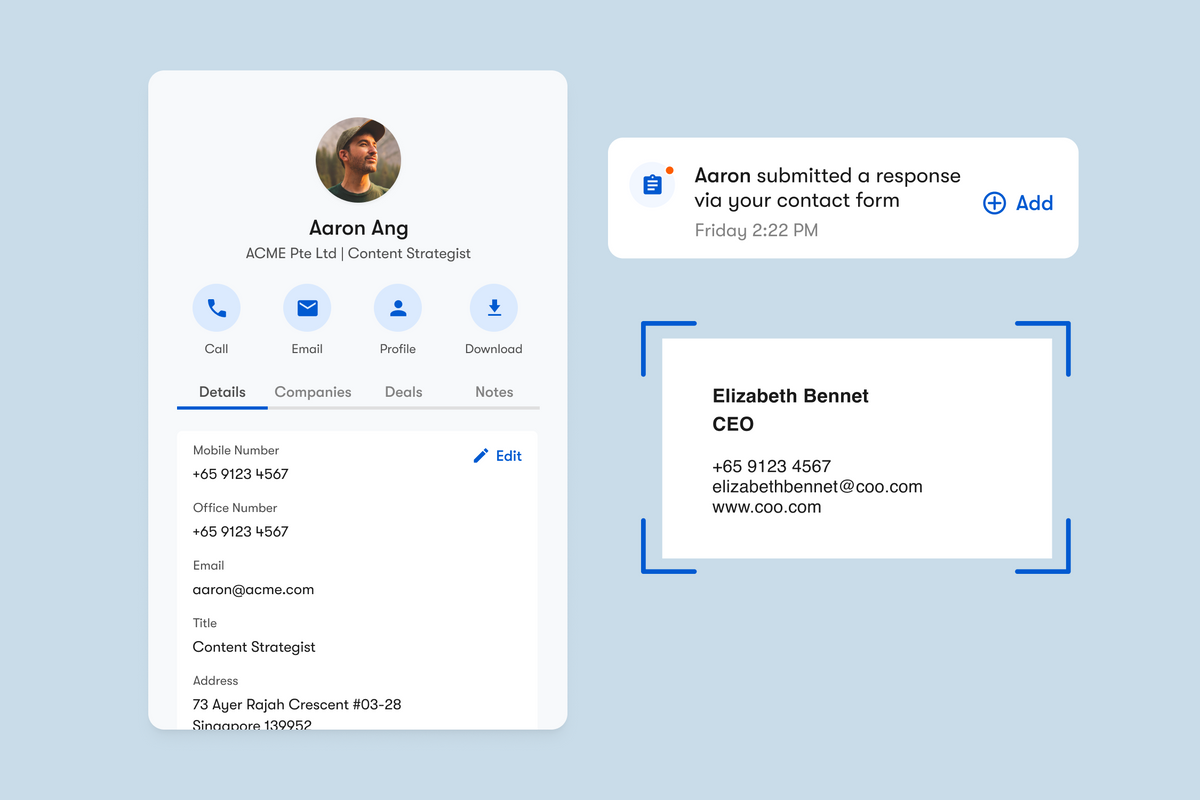
- A custom contact form on your digital name card when you want theirs. Your whole team can use the same form, so every submission is captured in one consolidated leads list instead of sitting across individual phones or spreadsheets. You can also see who each lead was assigned to, making it clear who is responsible for the follow-up.

- Scanning their paper card when they hand you one. The OCR business card scanner turns it into a contact without typing and automatically captures it into your contact manager.
The goal isn't to collect as many contacts as possible. It is to make sure every useful conversation leaves a clear record. A simple custom form gives your team the details needed for follow-up, while keeping every submission in the same place. Add a qualifying question if it helps your team sort leads later, but keep the conversation itself as the priority.
Stage 2: Qualify your event leads the same day
Its worth taking the extra hour after the event to sort your leads while you still remember the conversations.
This is one of the most valuable parts of the process, yet it is easy to skip once the event is over. You can still easily recall which conversation was promising and which can be ignored. Leave it too long, and every record starts to look the same.
A rough sort is enough. Three buckets:
- Need to follow up
- Worth an email
- Not worth either
For the leads worth pursuing, add a one-line note while the conversation is still fresh. It gives whoever follows up something useful to work with, rather than just a name and email address.
Stage 3: Verify before you send anything
Check the email addresses before they touch your CRM or your mailing list.
Event leads produce bad email addresses at a rate that surprises people. Handwriting gets misread, people mistype on a phone screen, and a few give a deliberately wrong address to end a conversation politely.
Sending to that list unfiltered does two kinds of damage. Bounces hurt your sender reputation, which affects deliverability for every future send. And invalid records pollute your CRM, which quietly corrupts every conversion metric you calculate afterwards. Running the list through email verification first takes minutes and prevents both.

Stage 4: Push the qualified ones to your CRM
Send the leads you qualified, not the whole list.
This is where a manual push turns out to be an advantage rather than a limitation. Because nothing moves into your CRM until you choose to move it, the records that arrive are ones you have already qualified.
That distinction matters more than it sounds. A CRM filled with unqualified event leads creates noise in your pipeline and makes it harder to see which contacts are actually worth pursuing. Pushing forty qualified contacts rather than a hundred and twenty raw ones keeps the data meaningful.
What this looks like across a two-day conference
- During the event: Capture through the lead form. No sorting, no notes beyond a few words. Stay in conversations.
- Each evening: Twenty minutes of qualify. Three buckets, a note on the good ones.
- Morning after the final day: Verify the full list, then push the qualified contacts to your CRM.
- Within 48 hours: Email those in the need to follow up bucket. Everyone else goes into a nurture sequence.
- The following week. Review what the event actually produced, using a CRM that only contains real leads.
Better capture tools don't fix a follow-up problem. The real advantage comes from what happens after the conversation: qualify leads while they're still fresh, verify the information before it enters your CRM, and follow up while the event is still memorable.

Frequently asked questions
How quickly should I follow up after a networking event?
What is the best way to capture leads at a trade show?
Related articles
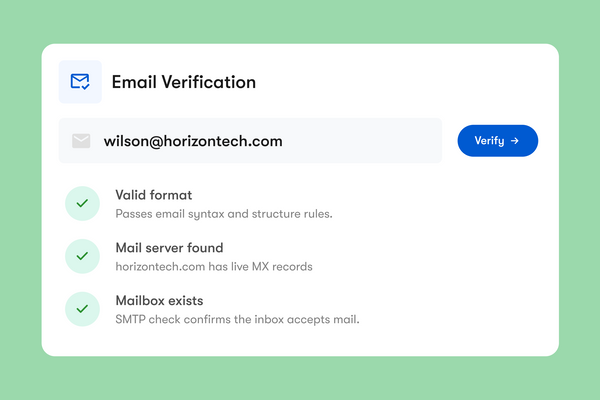
What Is Email Verification (And Why Your Follow-Ups Depend On It)
Learn what email verification is, why it protects your sender reputation and reduces bounces, and how to verify emails in...
Mastering Networking: Overcoming Networking Nerves
Learn 6 strategies to conquer networking nerves and boost confidence. Prepare, use digital tools, and engage in small talk for...
How to Follow-Up After Events: Email Templates Included
Learn how to craft compelling follow-up emails that make a lasting impression and boost your networking success.
The all-in-one digital business card
for professionals
- ✓ Fully Customisable
- ✓ Lifetime Updates
- ✓ AES-256 Encryption
- ✓ Certified CSA-Compliant
- ✓ iOS and Android